
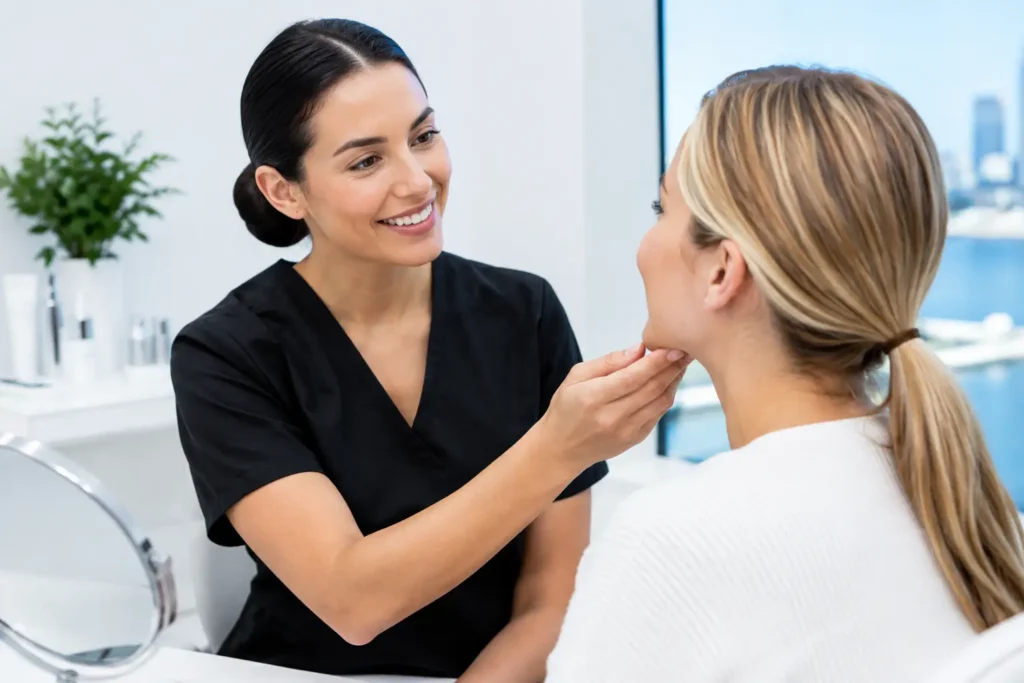
A good skin clinic Sydney clients return to is rarely chosen because of one impressive treatment photo. It is chosen because the practitioner listens carefully, understands what the skin is doing and recommends only what suits the person in front of them. Your skin changes with the seasons, stress, hormones, work and life. Your treatment plan should have room to change too.
Whether you are concerned by stubborn pigmentation, acne scarring, early laxity, redness or a loss of facial volume, the right clinic should make the next step feel clear. Not rushed. Not overdone. Just considered.
What to look for in a skin clinic Sydney locals value
Start with the consultation. This is where a practitioner should assess more than the concern you can see in the mirror. They should ask about your skin history, current skincare, sensitivities, lifestyle, medications and past treatments. They should also be honest about what a treatment can achieve, how long it may take and whether it is the right choice for you.
A considered consultation separates clinical aesthetic care from a menu of one-size-fits-all services. Two people may both ask for help with pigmentation, for example, but one may be managing post-inflammatory marks after acne while another has melasma that needs a far more cautious approach. Treating both concerns in the same way can be disappointing at best and aggravating at worst.
Look for a clinic that can explain the role of home care alongside in-clinic treatment. Professional treatments can create meaningful change, but results are supported by daily sunscreen use, barrier-conscious skincare and active ingredients selected for your skin. A plan should be practical enough to maintain between appointments.
Just as importantly, choose a practitioner who is prepared to say no. If your skin barrier is compromised, if an injectable treatment will not create a balanced result, or if your expectation is unrealistic, careful advice is a sign of quality care. The aim is not to sell every available option. It is to protect your skin and preserve what makes you look like you.
Begin with the concern, not the device
It is natural to arrive with a treatment in mind. You may have heard about RF microneedling, HIFU, skin boosters or laser resurfacing from a friend, on social media or after researching your options. These technologies can be excellent, but they are tools, not the starting point.
The more useful question is: what has changed, and what outcome are you hoping to see? Perhaps your makeup is sitting differently because of dehydration and texture. Perhaps your jawline feels less defined, your cheeks have lost support, or freckles and sun spots have become more noticeable. A consultation turns that observation into an informed pathway.
For skin texture, acne scarring and early collagen loss, RF microneedling may be considered. Devices such as Virtue RF and Secret RF deliver radiofrequency energy through fine needles to support collagen remodelling. Virtue RF includes a cooling plate, which can make treatment more comfortable while supporting a precise approach. The ideal device, settings and number of sessions depend on the concern, skin type and recovery time available.
For reduced firmness, LinearZ HIFU may be appropriate. It uses focused ultrasound energy at selected depths to support the skin’s natural collagen response. It is not a replacement for surgery, and it will not suit every degree of laxity. However, for the right candidate, a customised treatment can offer gradual, refined tightening without changing facial character.
Pigmentation, redness and uneven tone require particularly careful assessment. Curas Hybrid technology can be used for concerns such as pigment and redness, while chemical peels and Dermalogica Pro treatments may suit a more surface-level reset. Melasma requires restraint and consistency. Over-treating heat-sensitive or reactive skin may trigger further pigmentation, which is why a tailored plan matters.
The difference between enhancement and alteration
The best aesthetic work is often difficult to identify. Friends may notice that you look rested, healthier or somehow more polished, without being able to point to a single change. This is generally the result of proportion, timing and a practitioner who understands restraint.
Injectable treatments should be discussed in the context of your overall face, not as isolated areas to be filled or frozen. Anti-wrinkle treatment may soften expression lines. Dermal filler can restore carefully selected volume or structure. Collagen stimulators and skin boosters may improve skin quality over time. Rejuran can be considered for hydration, texture and a fresher-looking complexion.
Each option has different strengths, downtime, costs and suitability. Filler can offer immediate structural support, while collagen stimulation works more gradually. Skin boosters focus on hydration and luminosity rather than volume. The right answer may be one treatment, a combination over several months, or no injectable treatment at all.
A quality clinic will explain these distinctions plainly. It will also discuss risks, expected longevity and aftercare before treatment begins. Natural-looking results are not accidental. They come from a measured plan and the confidence to avoid unnecessary intervention.
Skin health needs a longer view
There is no single treatment that replaces sound skincare. Clinical treatments and cosmeceutical products work best when they support each other. For some clients, the most important first step is rebuilding hydration and barrier function. For others, it is introducing pigment-regulating ingredients, retinoids or targeted exfoliation at the right pace.
A bespoke serum can be useful when standard products do not address your exact priorities. Universkin formulations, for instance, can be tailored around concerns such as pigmentation, dehydration, acne or signs of ageing. Practitioner-grade ranges including iS Clinical, Re-dox Skin Lab, airyday and Guiya Minerals can then form a routine that is realistic for your morning and evening.
Consistency matters more than complexity. A cabinet full of strong actives is not automatically better skin. If your face is persistently dry, stinging or inflamed, more exfoliation is unlikely to help. The best routine is one that your skin tolerates and that you can follow consistently.
Hair thinning also benefits from an individual assessment. It can be influenced by genetics, hormones, stress, nutrition and medical factors. PRP-led hair restoration may support suitable candidates by using platelet-rich plasma from their own blood, but it should be discussed honestly alongside a broader understanding of the cause of thinning. Home care, including specialised haircare, may have a role as well.
Questions worth asking at your consultation
Before committing to a treatment plan, ask what the practitioner sees, why they are recommending a particular approach and what alternatives exist. Ask about downtime, discomfort, likely session numbers, cost over the full program and what happens if your skin does not respond as expected.
It is also reasonable to ask who will perform your treatment and what training or clinical experience they bring. If you are considering a procedure with meaningful risks or recovery, clarity is essential. You should never feel pressured to decide on the day.
At Skinxlulu, consultations in Camperdown and Bella Vista are designed around this level of care. The focus is on skin health, refined enhancement and treatment pathways that fit your concerns, features and lifestyle. Beautiful. Unique. You.
Your skin does not need to look filtered to look well cared for. Start with a consultation, bring your questions, and choose a plan that feels considered enough to grow with you.